
Blogs
Home > Blogs

When choosing a finish for aluminum profiles, one question keeps coming up: is anodizing better than traditional coating such as liquid paint or powder coating? Each method has strengths, and the right choice depends on the application, the look you want, and the operating conditions.
This article explains the real difference between anodizing and coating, compares them on the points that matter to engineers and buyers, and shows when anodizing is the better option.
Anodizing is an electrochemical process that converts the surface of the aluminum itself into a layer of aluminum oxide that is harder than bare metal. The layer grows both into and out from the surface, so it becomes part of the metal. It can be colored with dye absorbed into its pores, which are then sealed to lock the color in.
Coating is an external material, liquid paint or powder, applied on top of the metal and bonded to it. It acts as a cover that separates the metal from the environment, and its performance depends on surface preparation and adhesion.
Anodizing creates a layer from the metal itself, while coating wraps the metal in a different material. There is no separate interface in anodizing that can come apart.
An anodized layer is harder than bare aluminum and does not peel, but it is less flexible and can crack under heat stress or severe bending. Coatings can peel or flake if scratched down to the metal or poorly prepared, and corrosion can start at the scratch.
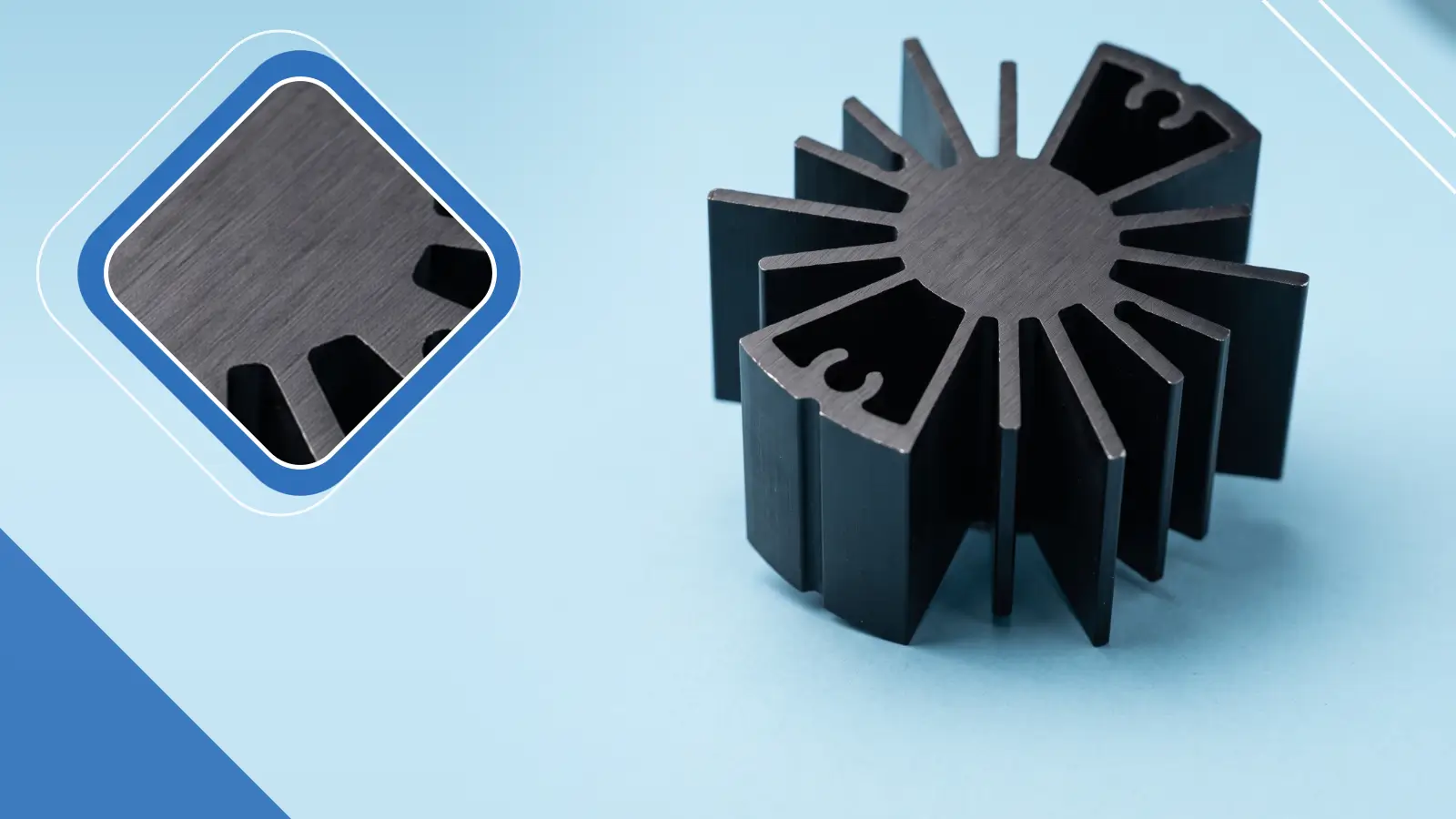
Anodizing keeps the natural metallic look and sheen of aluminum, while coating gives an opaque surface that hides the metal. Coatings win on color range; anodizing wins on genuine metallic appearance.
An anodized layer is thin, measured in microns, so it changes part dimensions only slightly and predictably. Coatings are usually thicker and can affect assembly of tight-tolerance parts.
The anodic oxide layer is electrically insulating, which helps in some electronic applications. The level of insulation depends on layer thickness.
Anodizing does not rely on paints containing volatile organic solvents, and anodized aluminum can be recycled without stripping a paint layer first.
Golden East Trading & Industry (GETI) anodizes aluminum profiles in silver, gold, and black, with bright, matte, and brushed finishes. We measure layer thickness according to ISO 7599 to keep the level of protection consistent in every batch.
Cost depends on order size and finish, but anodizing often lowers long-term maintenance cost because it never needs repainting.
In some cases, yes, but it is better to choose one method that suits the application from the start.
Anodizing and coating are less competitors than solutions for different needs. If you want a genuine metallic surface that will not peel, with precise dimensions and little maintenance, anodizing is the stronger choice for aluminum profiles.
Have a project? Request a quote from GETI.


 English
 العربية