
home > Blogs
🟧 Introduction
Have you ever wondered how ordinary aluminum becomes shiny, durable, and corrosion-resistant?
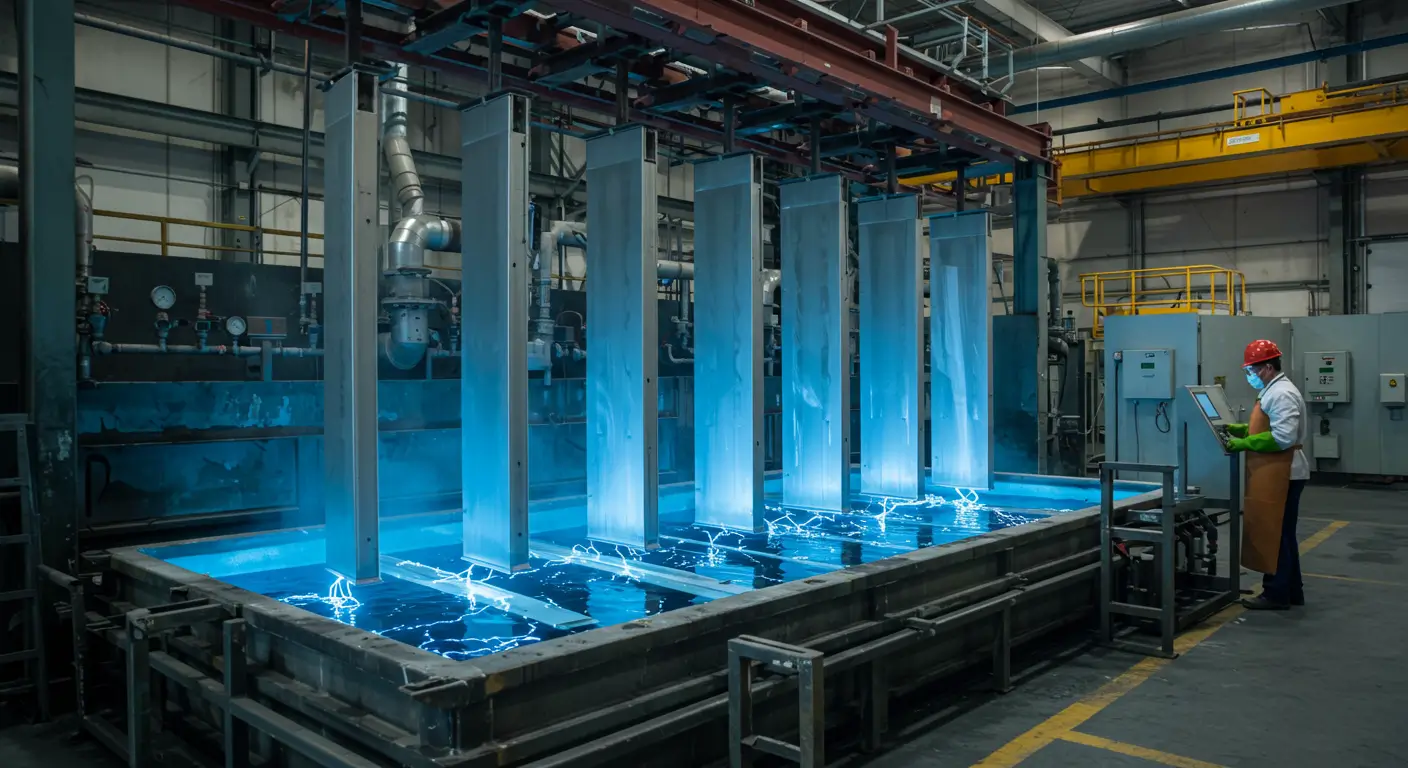
The secret lies in electrolysis — a fascinating process that uses electricity to trigger chemical reactions, transforming the metal’s surface into a hard, protective oxide layer through anodizing.
🔹 What Is Electrolysis in Anodizing?
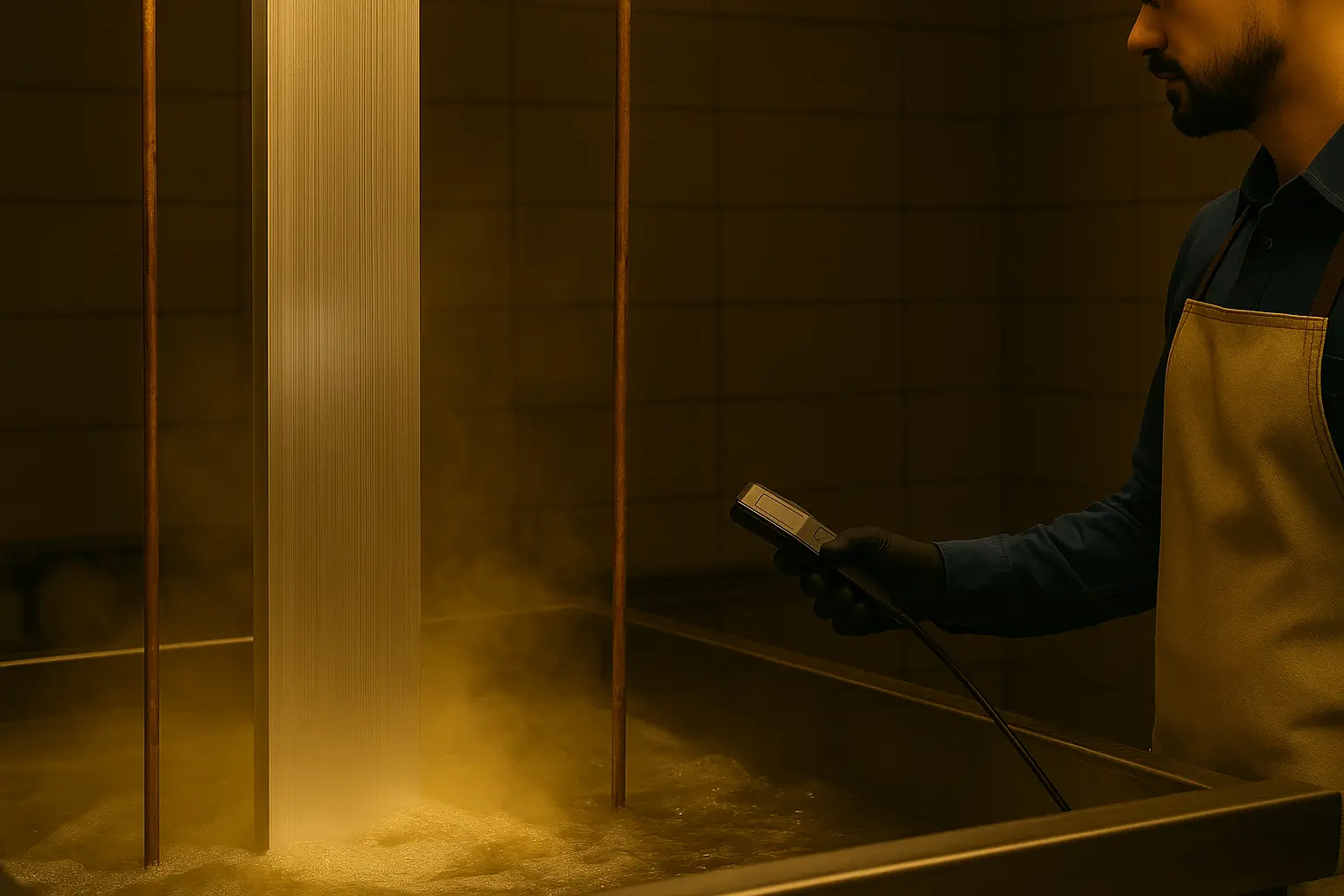
Electrolysis occurs when an electric current passes through an electrolyte solution with aluminum acting as the anode (positive electrode).
During the reaction, oxygen ions combine with aluminum atoms on the surface, forming a uniform layer of aluminum oxide (Al₂O₃).
In simple terms, electricity reorganizes the surface at the atomic level, making it stronger and more beautiful.
🔹 How Does Electrolysis Affect Surface Quality?
🔹 Key Factors Influencing Quality
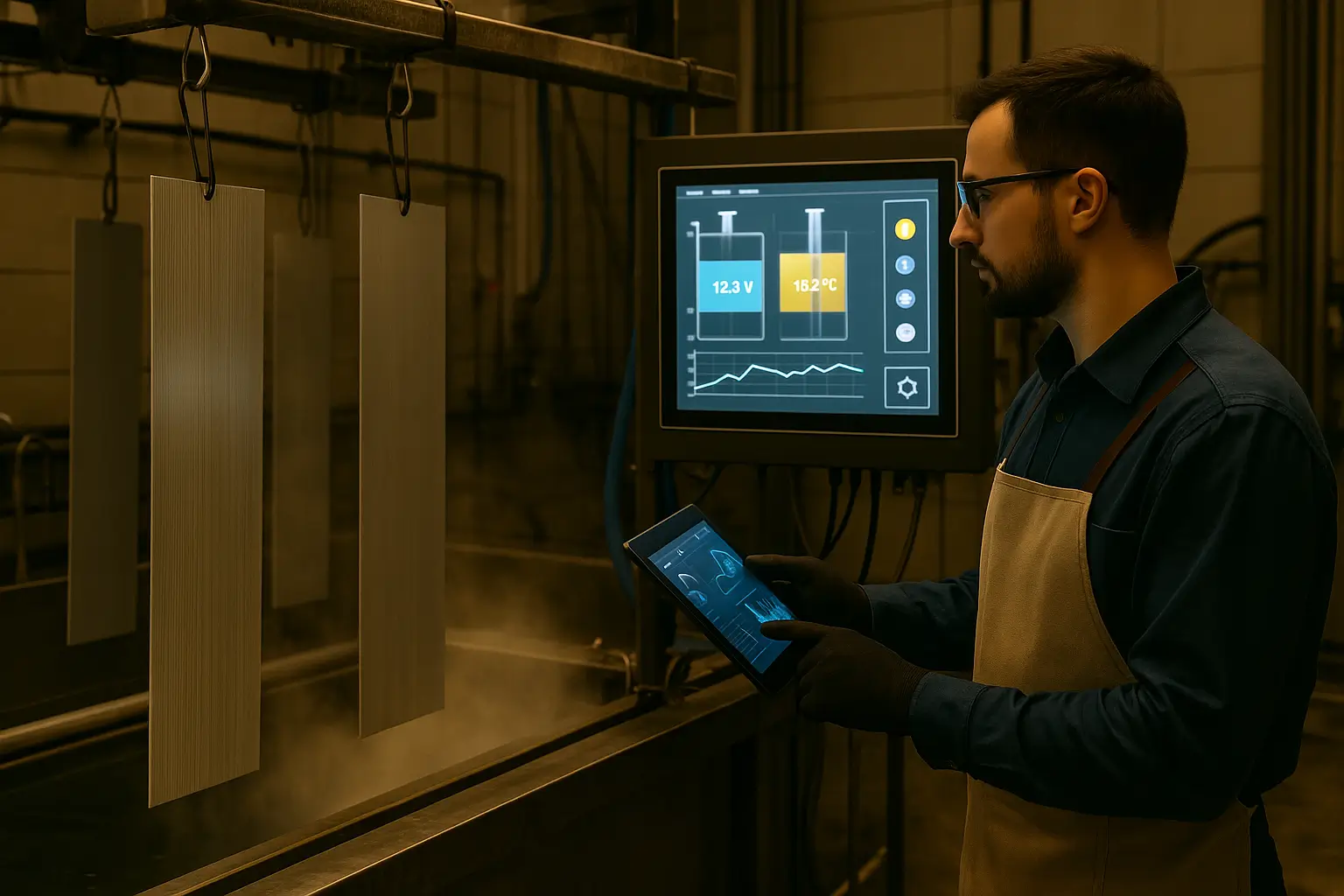
Each factor plays a crucial role in determining the final hardness, appearance, and durability of the anodized surface.
🟩 Conclusion
Electrolysis isn’t just a step in anodizing — it’s the core of the process.
Every volt, every second, and every controlled parameter contributes to the perfection of anodized aluminum — the kind that defines Golden East… Precision in Every Detail.



 English
 العربية