
home > Blogs
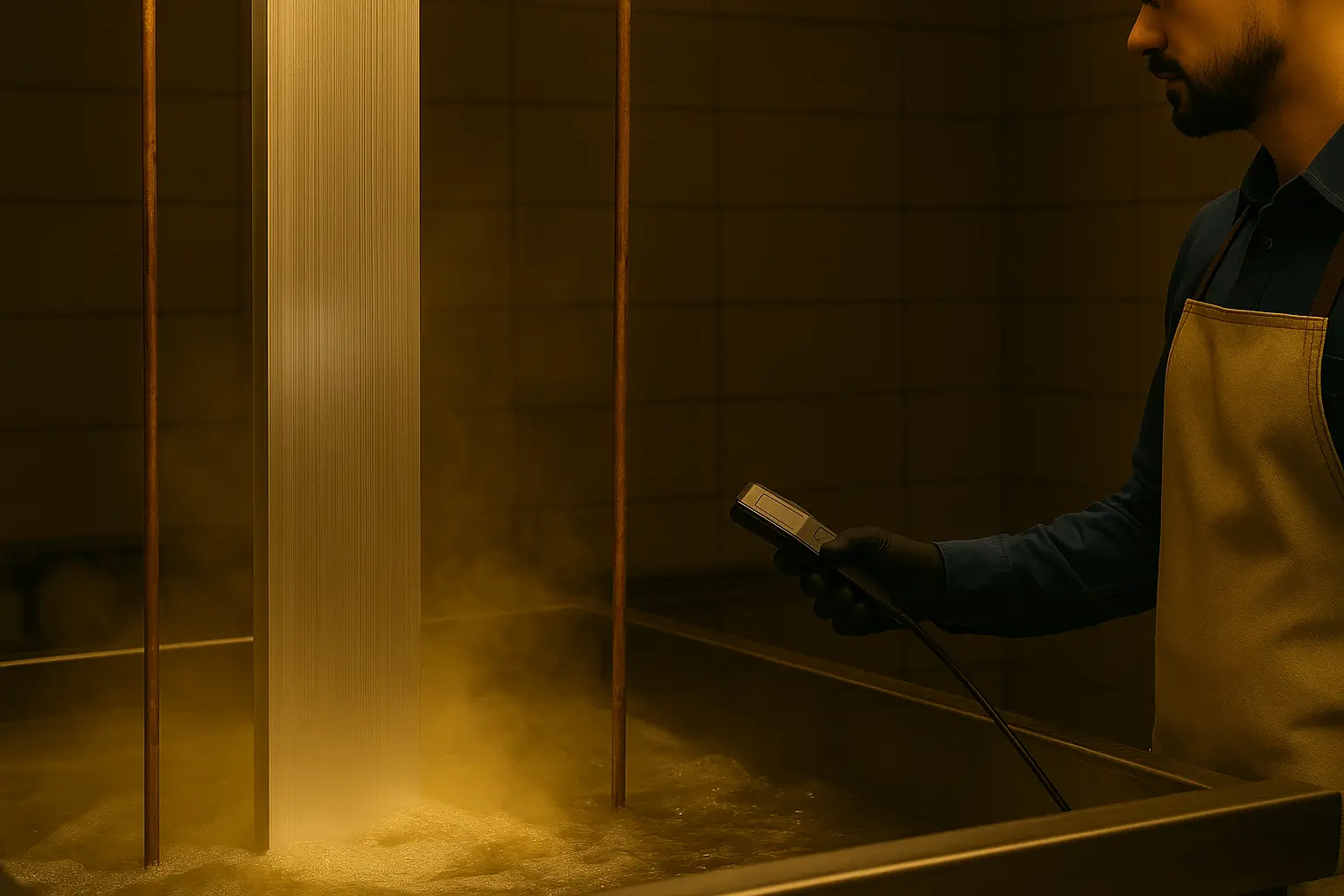
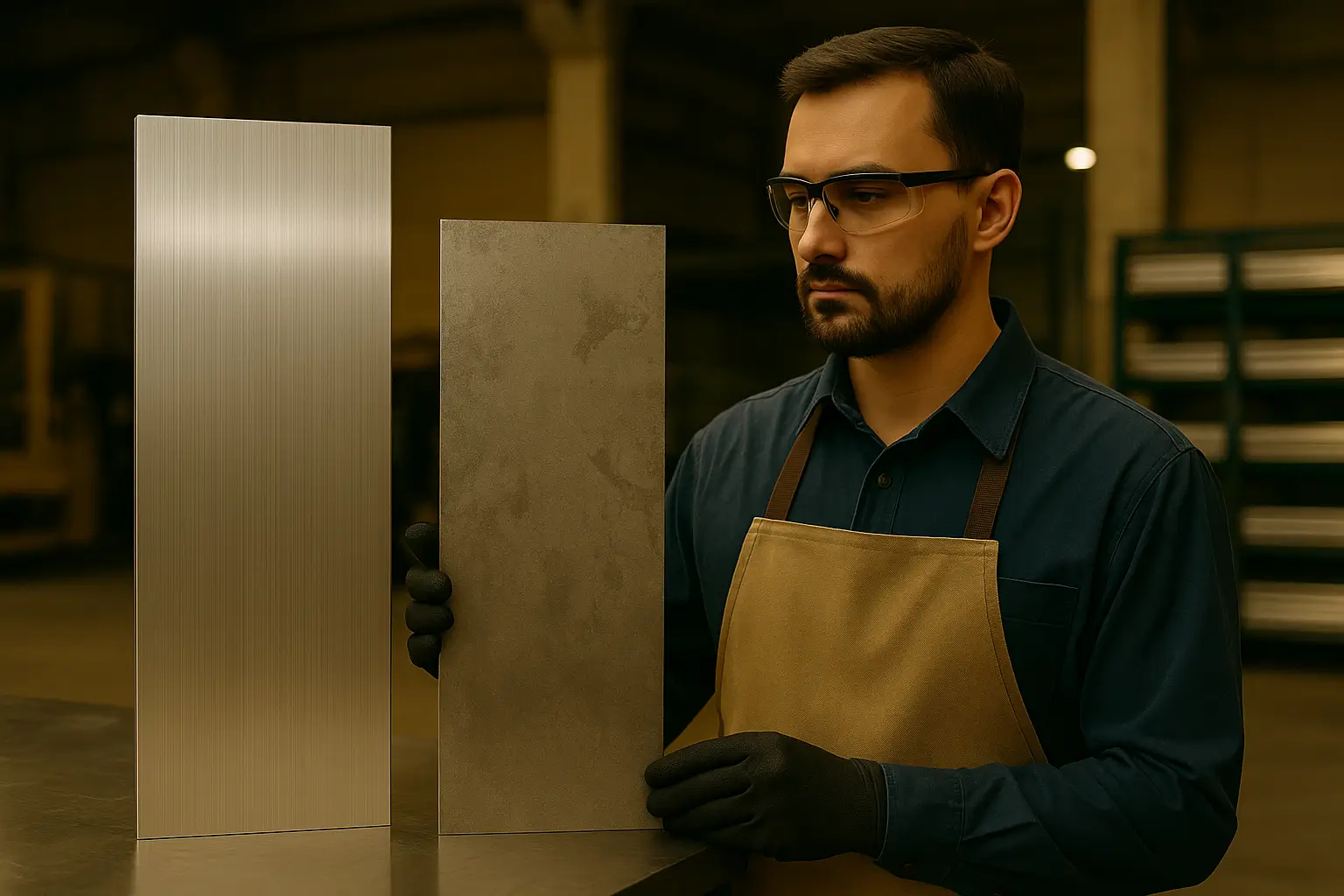
Before anodizing begins, aluminum undergoes several critical preparation steps that define the strength, uniformity, and appearance of the final oxide layer.
This stage, known as Surface Preparation, is the true foundation of high-quality anodizing.
Any contamination — oils, oxides, machining residue — prevents the anodic layer from forming evenly.
This leads to:
A perfectly clean surface is essential for a flawless anodized finish.
Removes machining oils, fingerprints, and residues.
Ensures the surface is clean and ready for controlled chemical reactions.
Removes the natural oxide layer and minor surface defects.
Creates a uniform matte surface ideal for anodizing.
Eliminates leftover alloying elements such as silicon or iron.
Critical for achieving color consistency, especially with alloy series like 6063.
May include:
This step prepares the surface for a stronger, more uniform anodic layer.
Proper preparation results in:
✔ Stronger anodic layers
✔ Superior scratch resistance
✔ Stable and consistent coloring
✔ Higher corrosion resistance
✔ Fewer defects and better repeatability
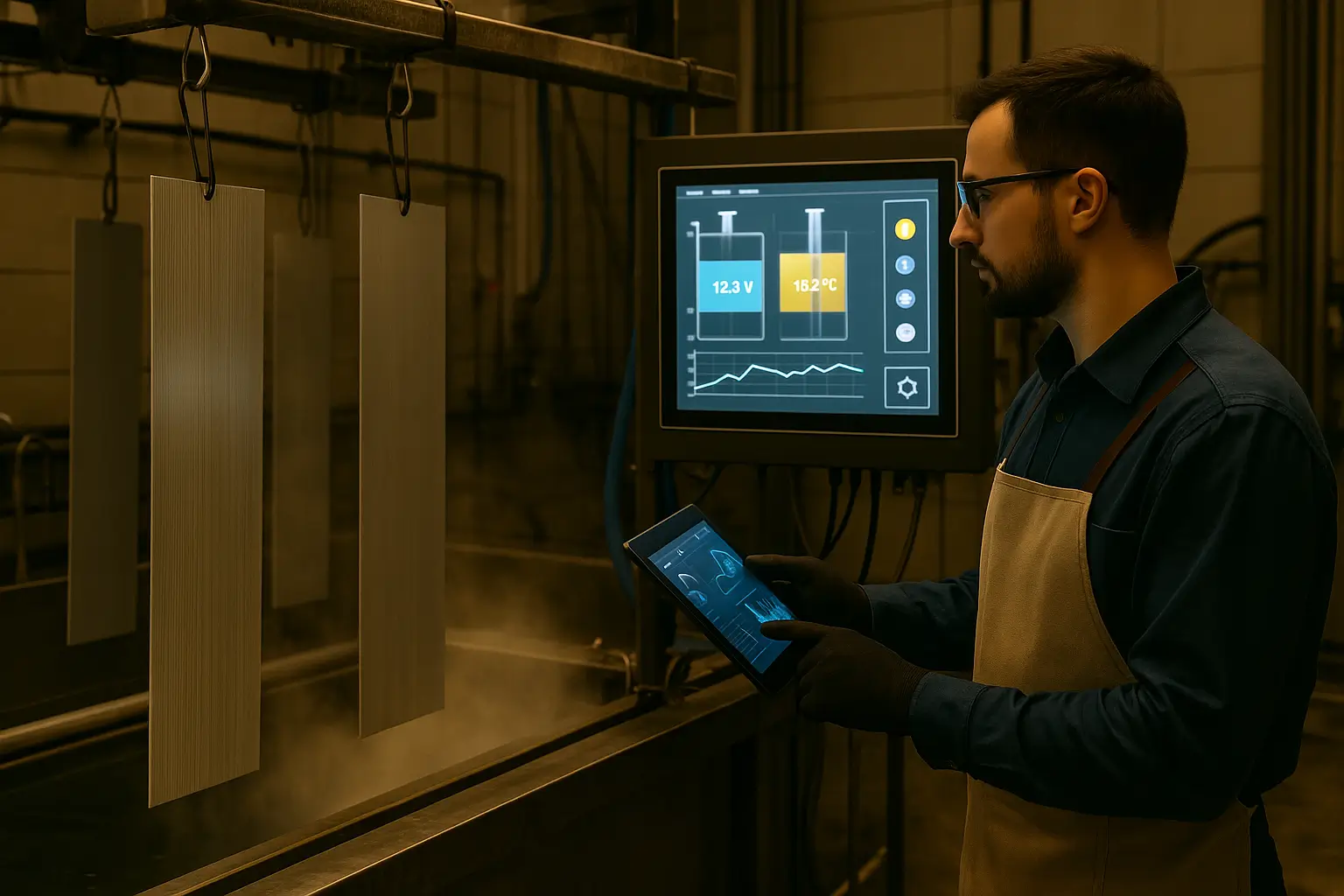
Golden East uses:
Ensuring every batch receives a world-class finish.
Surface preparation is not a preliminary step — it is the foundation of anodizing quality.
With controlled cleaning, desmutting, and conditioning, aluminum achieves the durability and elegance expected in modern architectural and industrial applications.



 English
 العربية