
home > Blogs
🟧 Introduction
Anodizing defines the final look and performance of aluminum surfaces.
But one frequent question is: Should I choose a bright or a matte finish?
The answer depends on functionality, design intent, and lighting conditions.
🔹 Bright Anodizing
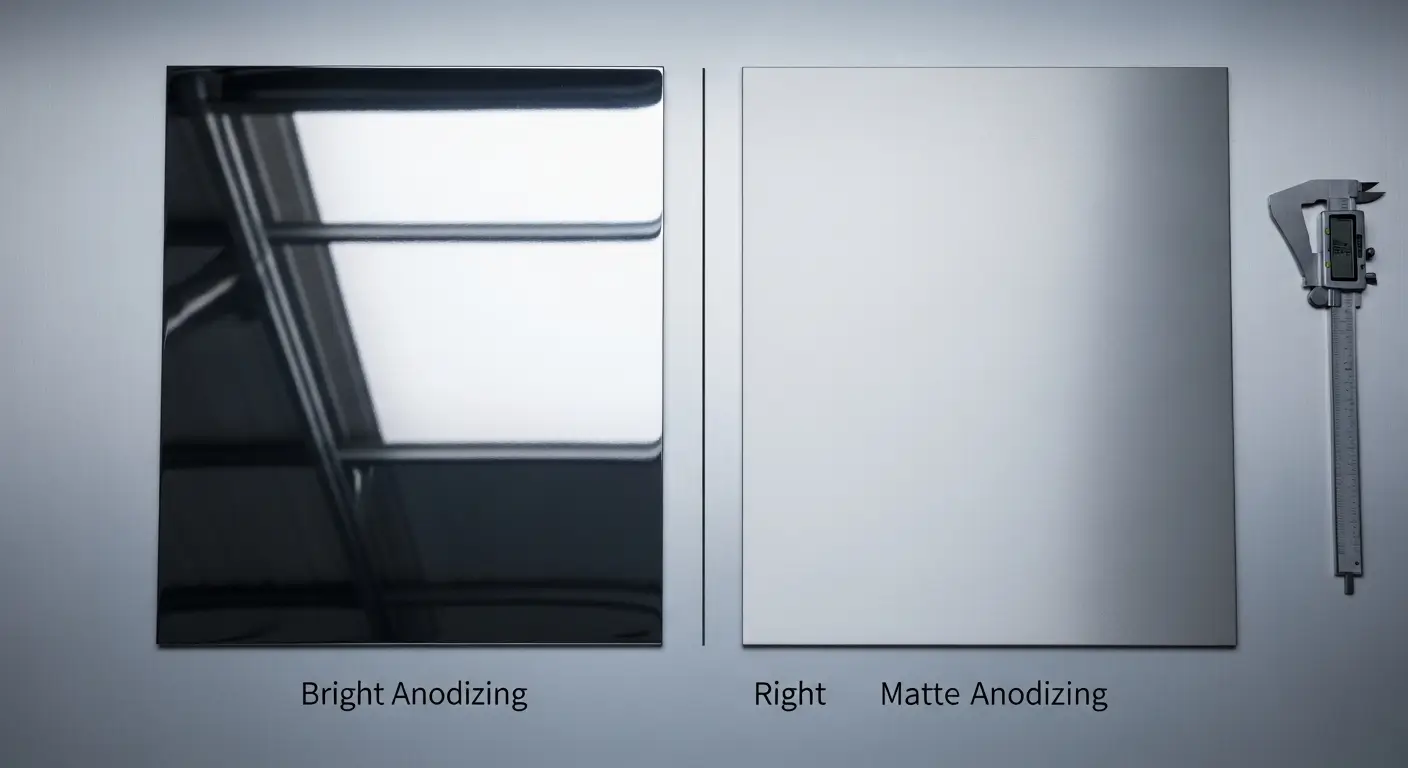
Bright anodizing follows chemical or mechanical polishing before the anodizing process.
It creates a clear oxide layer that enhances the natural reflectivity of aluminum, giving it a mirror-like brilliance.
Advantages:
Disadvantages:
Common Uses:
🔹 Matte Anodizing
Matte anodizing is achieved through sanding or etching before anodizing to diffuse reflections.
It results in a soft, tactile surface with a subtle, modern aesthetic.
Advantages:
Disadvantages:
Common Uses:
🔹 Quick Comparison
🔹 Quick Comparison Between Bright and Matte Anodizing:
1. Appearance:
Bright anodizing reflects light vividly, giving aluminum a glossy, mirror-like shine.
Matte anodizing offers a soft, non-reflective surface with a calm, premium look.
2. Texture:
The bright finish feels ultra-smooth and polished, while the matte surface is silky and velvety to the touch.
3. Scratch Resistance:
Bright anodizing has moderate resistance to scratches, while matte anodizing hides marks better and is more durable.
4. Ideal Applications:
Bright anodizing suits decorative items, handles, and appliance trims.
Matte anodizing is perfect for building facades, metal furniture, and industrial components.
5. Common Colors:
Bright finishes usually come in silver, gold, or champagne.
Matte finishes are typically silver, gray, or black.
🟩 Conclusion
Choosing between bright and matte anodizing depends on your design vision and performance needs.
At Golden East for Trade & Industry, we deliver both finishes to ISO 7599 standards, combining aesthetics with durability.
✨ Golden East – Precision in Every Detail.




 English
 العربية